Amboseli Mourns Craig, One of Africa’s Last Super Tuskers
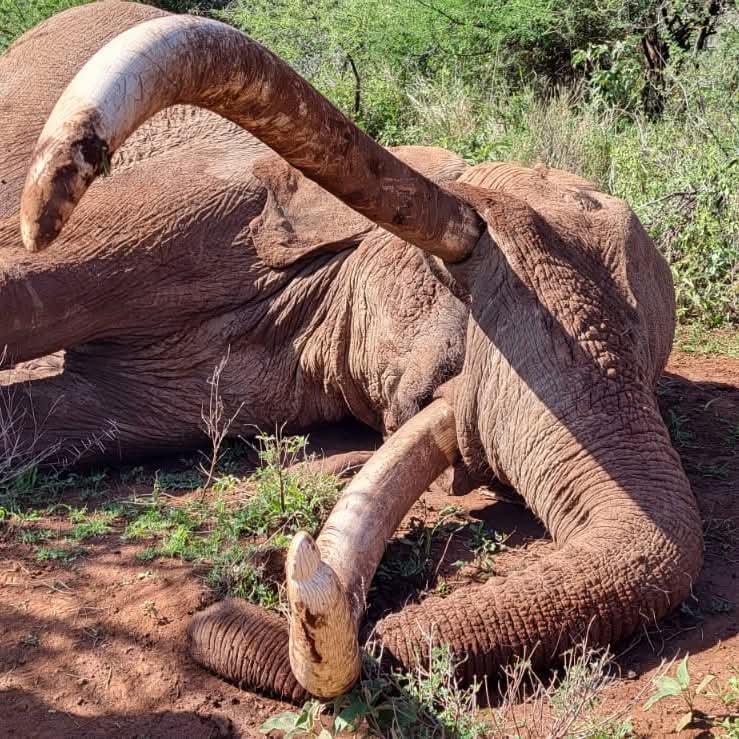
Body of Iconic Craig at Amboseli national Park. the last remaining African Tusker died aged 72. Kenya Wild Life Service officers discovered the lifeless body of the elephan during patrol. Photo/kws

By Gilbert Kimutai
Published on January 3, 2026
The death of Craig, one of Africa’s most iconic and rare elephants, has sent a wave of grief through Kenya and the global conservation community.
The legendary super tusker died early Saturday morning at Amboseli National Park at the age of 54, according to the Kenya Wildlife Service (KWS).
Renowned for his immense, ground-sweeping tusks and his unusually calm temperament, Craig was widely regarded as a living emblem of Africa’s threatened elephant heritage.
Super tuskers,elephants whose tusks each weigh more than 45 kilograms (100 pounds),are exceptionally rare, with only a handful believed to remain across the continent.
Born in January 1972 to Cassandra, the matriarch of the well-documented CB elephant family, Craig lived far longer than most wild elephants.
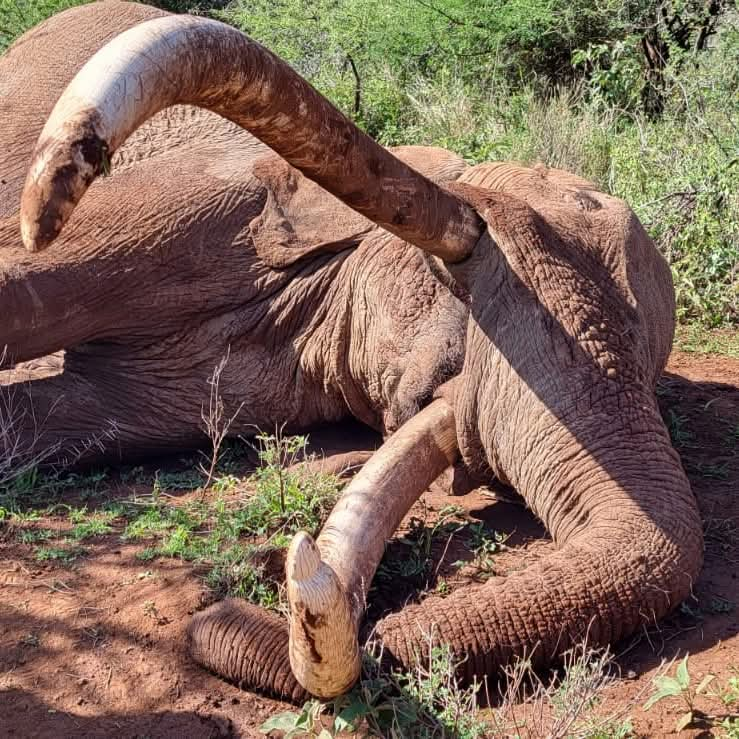
Lifeless Craig after it was discovered by KWS ending a era of an iconic elephant that strode the Amboseli Park for 72 years
Conservationists credit his longevity to decades of sustained protection in and around Amboseli, a landscape increasingly pressured by climate change, human activity, and habitat loss.
Over the years, Craig became one of the park’s most recognisable residents, frequently photographed standing against the dramatic backdrop of Mount Kilimanjaro.
His composed nature and tolerance of human presence made him a favourite among tourists, researchers, and wildlife filmmakers.
“Craig was remarkable not only for his tusks, but for his gentle and dignified presence,” KWS said in a statement. “He became a symbol of what successful conservation looks like.”
That calm disposition turned Craig into an informal ambassador for elephant conservation, helping to draw international attention to the threats facing Africa’s elephants, particularly poaching and shrinking habitats.
Beyond his fame, Craig played a crucial ecological and genetic role. He sired several calves, helping preserve a rare genetic line associated with large tusks,traits that have been steadily disappearing due to decades of selective poaching targeting big-tusked elephants for ivory.
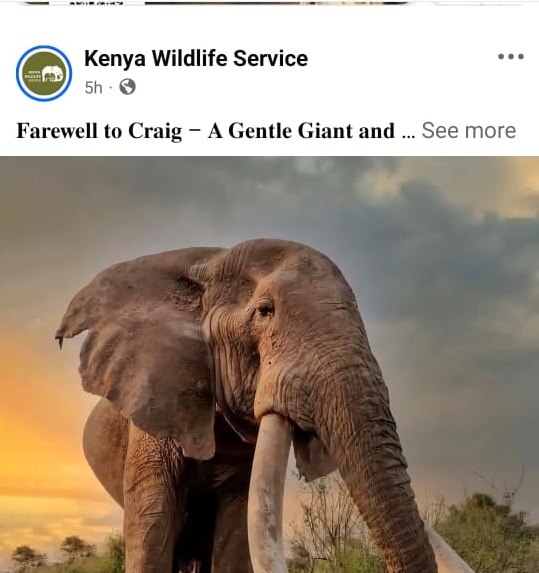
Kenya WildLife Service today annouced the death of iconic elephat marking the end of an era. Photo/file
Craig’s global profile was further highlighted in 2021 when East African Breweries Limited adopted him through its Tusker brand, a partnership aimed at promoting conservation awareness and community involvement.
KWS attributed Craig’s survival to constant monitoring, anti-poaching patrols, habitat protection, and close cooperation with local communities surrounding Amboseli.
These efforts allowed him to roam freely in a region where wildlife increasingly competes with human development.
Conservationists warn that Craig’s death further shrinks the already tiny population of super tuskers and serves as a stark reminder of the urgency to protect the remaining giants, which continue to be prime targets for the illegal ivory trade.
As tributes pour in from around the world, Craig is being remembered not just as a giant of Amboseli, but as a powerful symbol of what determined conservation can achieve, and what stands to be lost without it.
KWS said Craig’s legacy will endure through his offspring and through renewed calls to safeguard Africa’s elephants for generations to come.
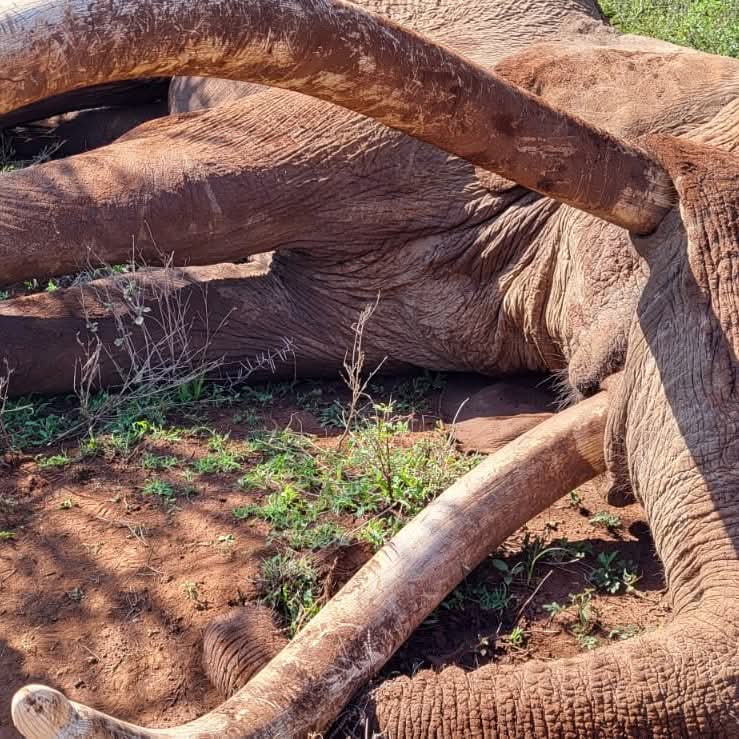
Lifeless Craig after it was discovered by KWS ending a era of an iconic elephant that strode the Amboseli Park for 72 years
Comments Below