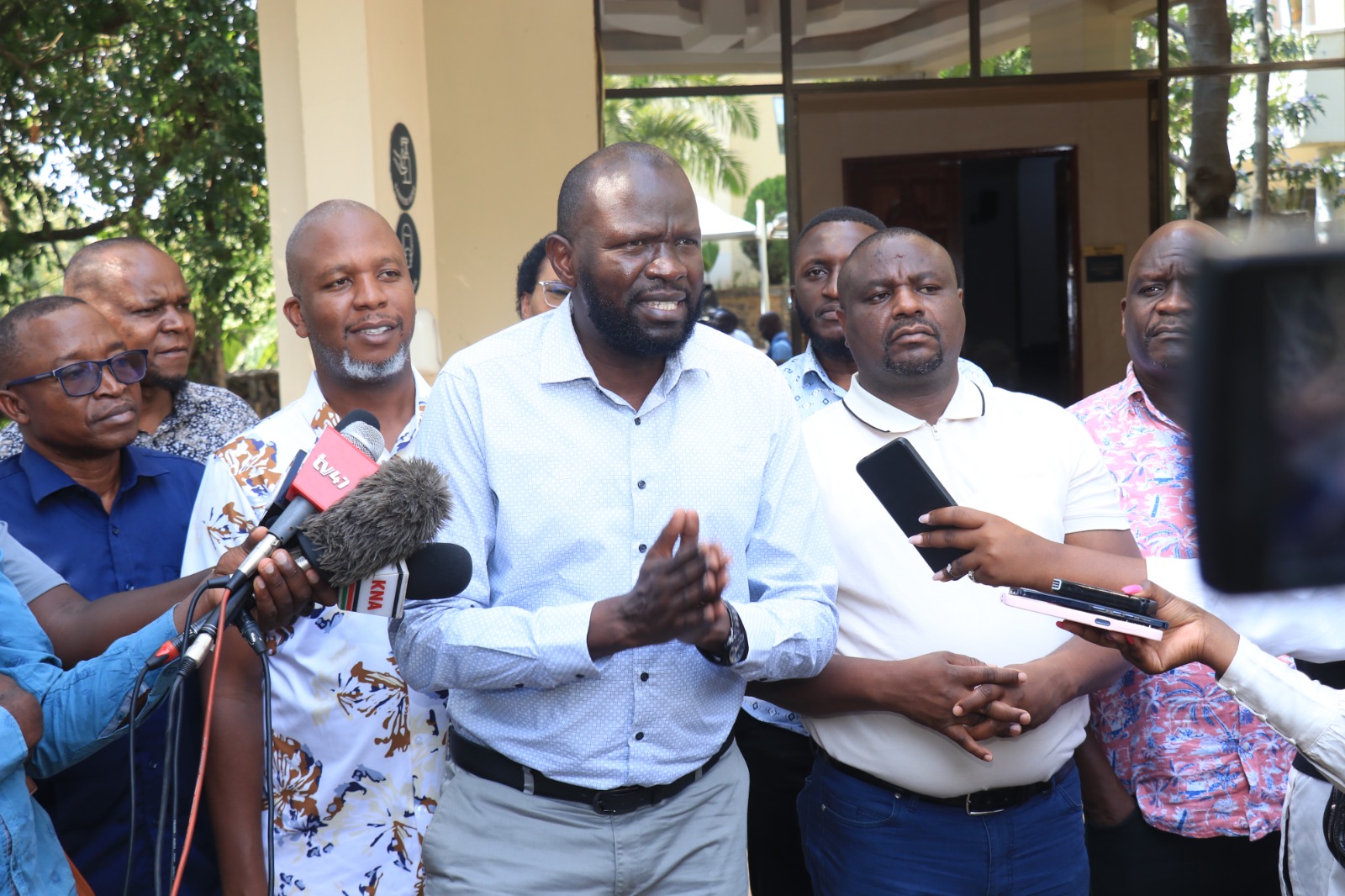
Members of the National Assembly Public Investments Committee on Governance and Education have raised concerns over financial management in national schools, citing disparities in textbook distribution, long-standing fee arrears, school borrowing and procurement practices.
The committee, chaired by Luanda MP Dick Maungu, said some national schools had received hundreds of textbooks beyond their requirements while institutions in marginalised areas continued to face shortages.
The concerns emerged during the committee’s examination of Auditor-General’s reports covering the 2020/21 to 2024/25 financial years for national schools at a retreat in Kisumu.
Schools whose officials appeared before the committee included Ng’iya Girls High School, Maseno School, Maranda Boys High School, Kisumu Girls High School and Chavakali Boys High School.
Also Read: Kapkatet Stadium set for 10,000-seater upgrade after years of neglect
Maungu said the committee had identified significant discrepancies in the allocation of learning materials.
“We have seen a school that received 400 and 506 extra books,” he said.
He questioned whether textbook distribution was based on accurate enrolment data, warning that excess supplies to some schools could leave others underserved.
“The question is, when you receive extra numbers, does it mean there is a school somewhere that does not have books?” he asked.
The committee plans to summon the Kenya Institute of Curriculum Development (KICD) to explain the allocation system and ensure schools in remote areas such as Mandera and Turkana receive adequate learning materials.
MPs also raised concerns over millions of shillings in outstanding school fees, with some arrears dating back to 2010.
Maungu said school heads faced a dilemma between recovering debts and complying with Government directives barring schools from withholding students’ certificates over unpaid fees.
Also Read: Tata Chemicals Magadi shutdown: DCP accuses Ruto of targeting firm over mineral, oil interests
“We have advised them that they don’t need to hold a certificate for the learner because this student wants to join university or college,” he said.
He called for schools to prepare schedules of long-standing arrears and submit them to the Ministry of Education for consideration, noting that some debts had accumulated because of delayed Government capitation.
The committee further opposed the practice of schools taking commercial bank loans without the required approvals.
Maungu cited Ng’iya Girls High School, which had previously obtained a loan of about Ksh50 million for a project estimated at Ksh150 million.
“That should be very limited. If you allow principals to keep borrowing money left, right and centre, we shall enter into a total mess,” he warned.
He said public schools must obtain approval from the Ministry of Education and the National Treasury before taking loans.
Also Read: Mid-Term break set for June 24–28 as Education ministry moves to tackle student unrest
The committee also questioned procurement practices in schools, saying national institutions must comply with the Public Procurement and Asset Disposal Act and employ qualified procurement officers.
The findings will form part of a report to Parliament containing recommendations on financial management and accountability in public schools.
Maungu said the exercise marked a new phase of parliamentary oversight of secondary schools, beginning with about 120 to 130 national, or C1, institutions.
“For the first time ever in this country, this committee will be taking on the books of high schools,” he said.