President William Ruto has explained how his administration intends to reduce the cost of living and increase household incomes through the Bottom-Up Economic Transformation Agenda (BETA).
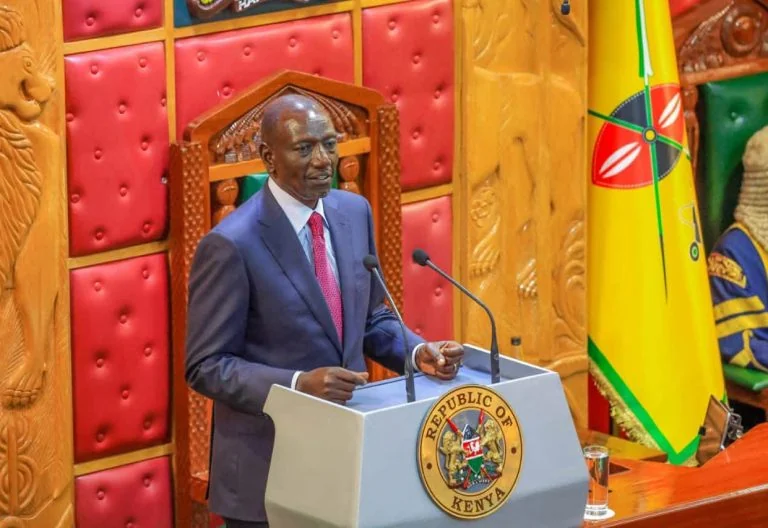
Speaking during the State of the Nation Address in Parliament on Wednesday, November 18, 2026, Ruto said his administration was elected in 2022 with a mandate to remove economic barriers that limited Kenyans’ participation in wealth creation.
He said the government’s economic strategy was built around two main objectives: lowering the cost of essential goods and services while increasing the earnings of households.
“In 2022, Kenyans entrusted this administration with the responsibility to move the barriers, to remove the barriers that constrained them and expand their participation in creation of national wealth,” Ruto said.
The President said the Bottom-Up Economic Transformation Agenda was designed to stabilise the economy, improve agricultural productivity, expand access to affordable healthcare and housing, reform education and support small businesses.
He added that the programme also prioritised employment creation and infrastructure development to improve productivity and expand economic opportunities.
“Our economic proposition was simple: reduce the cost for families, and increase their income from what they do,” he said.
Ruto explained that reducing household expenditure would require making essential services and commodities more affordable, including food, healthcare, housing, education and transport.
At the same time, he said the government was seeking to improve household earnings through more productive agricultural activities, growing businesses and the creation of new employment opportunities.
“More productive farms, growing businesses, and new employment opportunities would expand household earnings,” he said.
The President maintained that reducing the cost of living and increasing incomes were interconnected priorities that remained central to his administration’s economic agenda.
“Both were necessary then, and both remain necessary today,” Ruto said.