The Energy and Petroleum Regulatory Authority (EPRA) has retained the maximum retail prices of petrol, diesel and kerosene for the next one-month pricing cycle.
The prices will remain in force from September 15 to October 14, 2026, offering motorists and households a reprieve from further changes at the pump.
In a statement issued Monday, September 14, 2026, EPRA said the maximum retail prices for Super Petrol, Diesel and Kerosene will remain unchanged during the period under review.
Also Read: Motorists Association slams EPRA over fuel prices, demands reforms to pricing system
The regulator said the prices are inclusive of Value Added Tax (VAT), in line with the VAT Act, 2013, the Finance Act, 2023, the Tax Laws (Amendment) Act 2024 and other applicable tax provisions.
Mixed changes in global oil costs
EPRA said the decision comes amid mixed movements in the cost of imported petroleum products.
The average landed cost of Super Petrol fell by 7.87 per cent, dropping from US$948.92 per cubic metre in July 2026 to US$874.26 per cubic metre in August 2026.
However, the cost of imported diesel increased significantly during the same period.
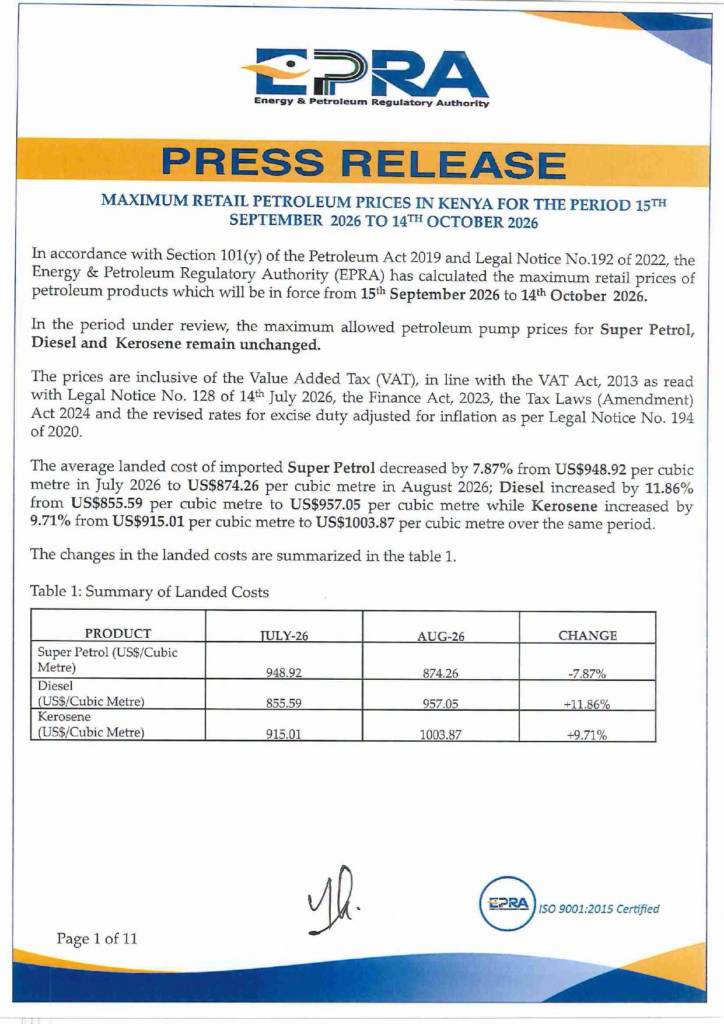
Diesel landed costs rose by 11.86 per cent, from US$855.59 per cubic metre to US$957.05 per cubic metre.
Kerosene also recorded an increase, with its average landed cost rising by 9.71 per cent, from US$915.01 per cubic metre in July to US$1,003.87 per cubic metre in August.
The changes come as the regulator continues to review the international market prices and other factors used in determining Kenya’s monthly petroleum prices.
Prices remain unchanged
Despite the fluctuations in landed costs, EPRA said the maximum pump prices for the three petroleum products would remain unchanged for the September 15–October 14 cycle.
Also Read: EPRA appoints Joseph Oketch as acting director-general after Bargoria exit
The monthly review is conducted under Section 101(y) of the Petroleum Act, 2019 and Legal Notice No. 192 of 2022, which mandates EPRA to determine maximum retail prices for petroleum products.
The unchanged prices mean motorists will continue paying the same regulated rates for petrol and diesel, while households that rely on kerosene will also not face an additional increase during the latest pricing cycle.
The move comes at a time when changes in fuel prices continue to have a direct impact on transport costs, food prices and the wider cost of living.
EPRA’s latest review will therefore provide some stability to consumers and businesses for the next 30 days, despite the divergent movements in international petroleum costs.