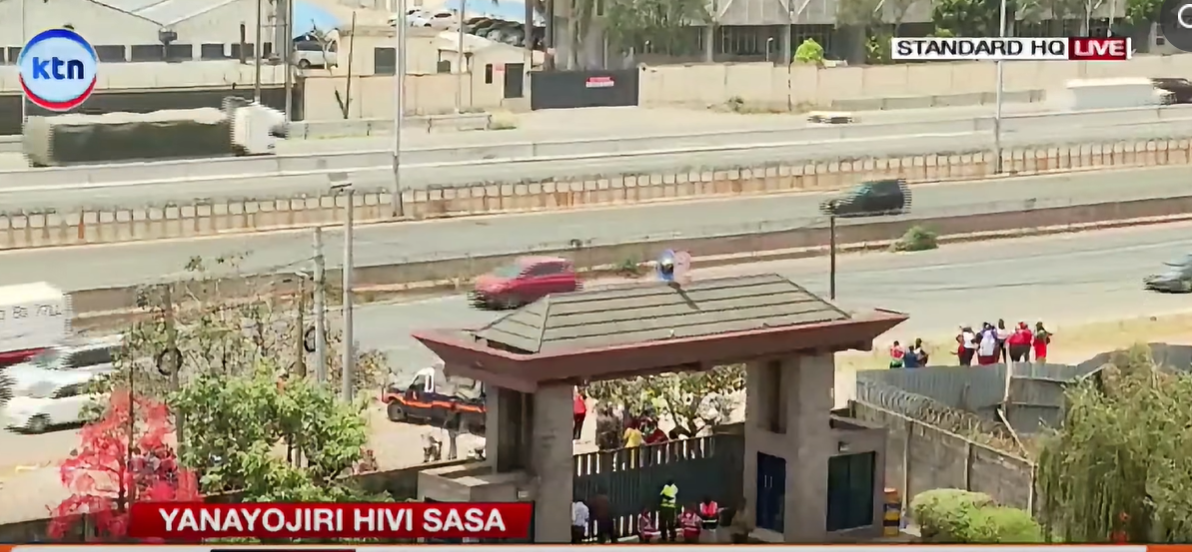
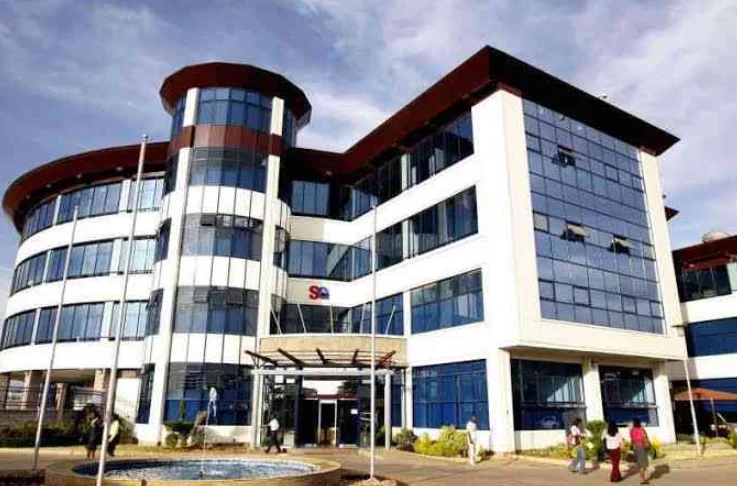
Tensions erupted outside the Standard Group offices along Mombasa Road on Friday, October 2, 2026, after rival groups gathered at the media house over its coverage of President William Ruto’s administration.
Members of Bunge la Mwananchi had converged at the Standard Group gates to deliver a letter protesting what they described as negative and critical headlines targeting the government.
The group said it wanted to formally raise its concerns with the media organisation over its reporting on the Ruto administration.
However, the Bunge la Mwananchi members were met by another group that had gathered in defence of the media house, arguing that criticism of journalistic content should not be used to intimidate journalists or undermine press freedom.
The confrontation brought into focus the growing tensions surrounding media coverage of the government, with the two camps taking opposing positions on editorial independence and the limits of criticism of public institutions.
Also Read: Standard Group Associate Editor Alex Kiprotich abducted along Gilgil-Nakuru road
Rival camps clash over media freedom
The group defending the Standard Group argued that journalists and media organisations have a constitutional right to publish stories and headlines without intimidation, provided they operate within the law and professional standards.
Bunge la Mwananchi, meanwhile, maintained that media houses should be held accountable for coverage that it considers unfair or hostile to the government.
The confrontation comes against the backdrop of a public dispute between President Ruto and the Standard Group over the newspaper’s coverage of his administration.
The dispute gained prominence in June when Ruto criticised The Standard’s headlines in a post on X, accusing the media house of publishing what he described as “extortionist propaganda” against him and his administration.
Standard Group Chief Executive Officer Chaacha Mwita subsequently defended the media house’s editorial independence, maintaining that it would continue to scrutinise those in power.
Dispute followed by attacks on journalist
The tensions later coincided with incidents involving Standard Group Associate Editor Alex Kiprotich.
On June 27, Kiprotich reportedly escaped an attempt by armed men to seize him in Nakuru while he was travelling to work.
According to reports by the Standard Group and the Committee to Protect Journalists (CPJ), four armed men intercepted his vehicle. Kiprotich managed to escape after locking his vehicle doors and driving away.
The incident occurred days after Ruto’s public criticism of the Standard Group.
The media house later said its own investigations had linked the vehicle allegedly used in the incident to the National Police Service’s Crime Research and Intelligence Bureau. The allegation has not, however, resulted in a publicly established finding of responsibility.
The incident triggered concerns among press freedom organisations over the safety of journalists covering the government.
Kiprotich later abducted
The concerns intensified in September when Kiprotich was reportedly abducted for several hours after armed men intercepted the vehicle in which he was travelling along the Gilgil-Nakuru road.
He was later found safe near Masinga Dam after seeking refuge at a nearby household.
The Standard Group said the attackers questioned Kiprotich about his journalism and the sources of stories published by the media organisation.
CPJ called for an independent investigation into the incident, pointing to the earlier public dispute between Ruto and the Standard Group and wider concerns over the safety of journalists in Kenya.
The National Police Service condemned the incident and ordered investigations.
Also Read: KHRC demands arrest, prosecution of officers over abduction of Standard Editor Alex Kiprotich
Inspector General of Police Douglas Kanja directed the Anti-Abduction Unit to establish the circumstances surrounding the incident and identify those responsible.
Fresh spotlight on press freedom
Friday’s confrontation outside the Standard Group offices has now added a new dimension to the debate over media freedom, government criticism and editorial independence.
Bunge la Mwananchi members say their concerns over the media house’s headlines should be heard, while those defending the Standard Group argue that media organisations must be allowed to scrutinise government without intimidation.
The Standard Group has maintained that its role includes holding those in power to account and informing the public.
Government officials, on the other hand, have continued to defend their right to challenge media reports they consider inaccurate or unfair.
The competing positions have placed the Standard Group at the centre of a wider national debate over the limits of government criticism, editorial independence and the constitutional protection of media freedom as Kenya heads towards the 2027 General Election.