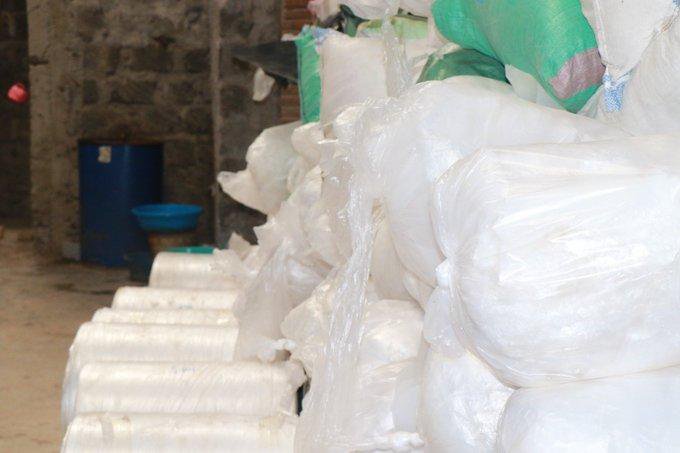
Traders found selling or possessing banned plastic carrier bags risk fines of up to Ksh4 million or a jail term of four years as the government intensifies its crackdown on plastic pollution.
This follows the arrest of two traders in Embu town after National Environment Management Authority (NEMA) officers recovered 4,995 prohibited plastic carrier bags during an enforcement operation.
The two traders were arrested on Monday, November 2, 2026, and subsequently arraigned in court to answer charges of being in possession of the banned plastic bags.
Also Read: Mbadi warns against politicisation of Rironi-Mau Summit Highway project
In a statement on Tuesday, November, 3, 2026, NEMA warned traders and members of the public against manufacturing, importing, exporting, selling or using plastic carrier bags without the required licence.
The authority said offenders risk prosecution under Section 144 of the Environmental Management and Coordination Act (EMCA) and the Environmental Management and Coordination (Management and Control of Plastic Packaging Materials) Regulations, 2024.
Those found guilty face a prison sentence of between one and four years, a fine of between Ksh2 million and Ksh4 million, or both imprisonment and a fine.
Kenya’s plastic bag ban
Kenya introduced a nationwide ban on plastic carrier bags in August 2017, in one of the country’s most significant environmental interventions aimed at reducing plastic pollution.
The ban targeted the manufacture, importation and use of plastic carrier bags commonly used by shoppers and traders to package goods.
Also Read: Gachagua lectures opposition leaders over ‘laziness’ in Ruto ouster campaign
The move was aimed at addressing the growing problem of plastic waste, which had become a major environmental concern due to the bags’ widespread use, poor disposal and difficulty in decomposing.
Before the ban, plastic bags were commonly found in drainage systems, rivers, roadsides, dumpsites and other public spaces, contributing to blocked drainage, environmental degradation and threats to wildlife.
The restrictions were subsequently extended through regulations targeting plastic packaging materials, with NEMA tasked with enforcing compliance and taking action against offenders.
NEMA has maintained that the ban remains in force and warned businesses against dealing in prohibited plastic carrier bags.