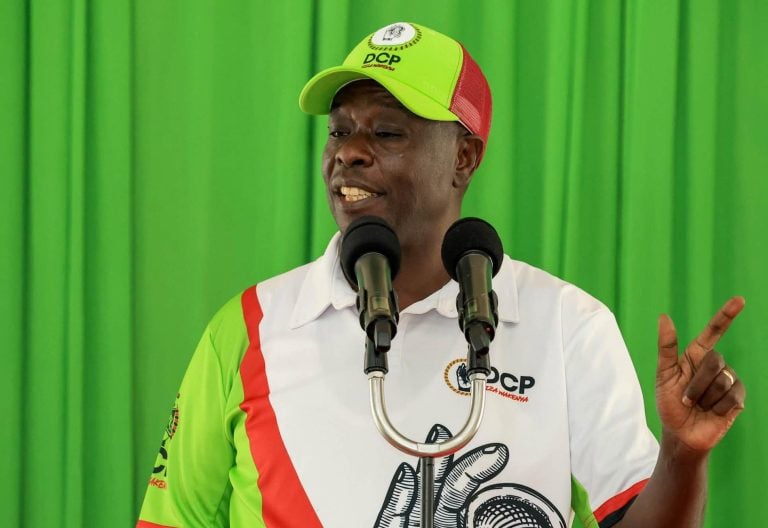
The National Cohesion and Integration Commission (NCIC) has summoned former Deputy President Rigathi Gachagua over a series of utterances he allegedly made during political rallies and public events in different parts of the country.
The commission says the statements are part of ongoing investigations under Sections 27, 29 and 63C as read with Section 63E of the National Cohesion and Integration Act.
In the summons, NCIC said it is investigating “various utterances” allegedly made by Gachagua on different dates and at different public forums across Kenya.
The commission reminded Gachagua that it is mandated to promote national unity and harmony by fostering peaceful relations among communities, particularly by guarding against negative ethnicity, racism, religious intolerance and hate speech.
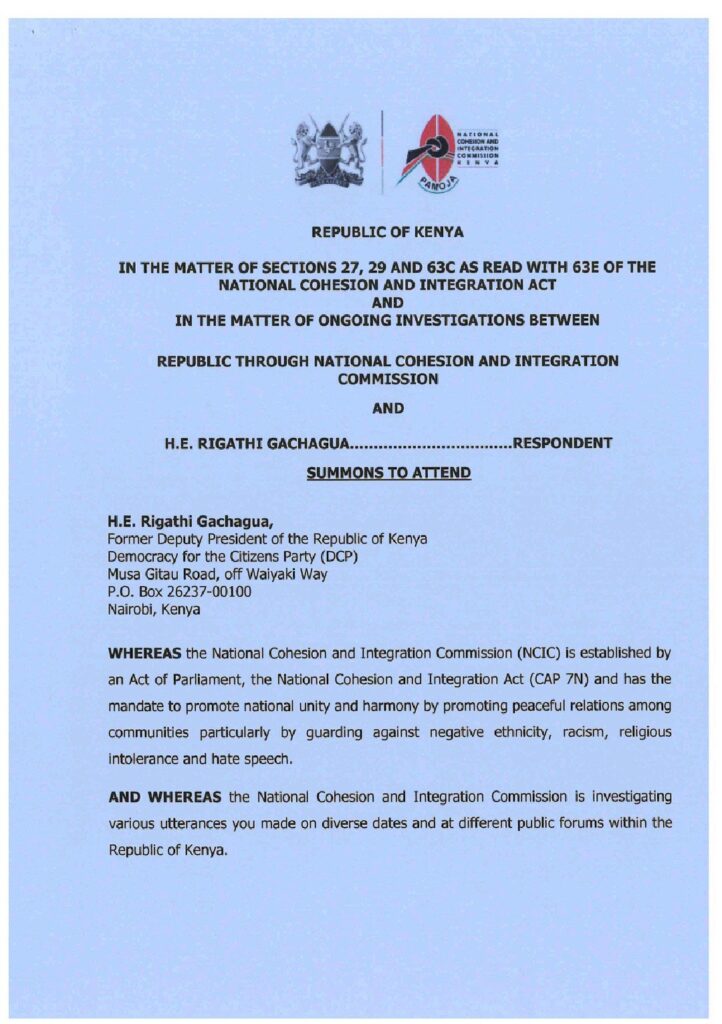
One of the incidents cited by NCIC occurred on June 12, 2026, at Luanda in Vihiga County, where Gachagua allegedly made remarks concerning the Luhya community and former Deputy President Musalia Mudavadi.
According to the summons, Gachagua said:
“Na macuzo sisi si ni macousin? Si sisi ni familia moja? Huyu Kasongo alikuwa anapiga kelele ati Riggy G amesema macuzo wakae pamoja, wewe Kasongo wachana na familia yetu, enda utafute macousin yako huko Sudan pamoja uliwacha macuzo yako, aende Sudan asiende?”
The commission has listed the remarks as part of the statements it is examining to establish whether they contravened provisions of the National Cohesion and Integration Act.
Also Read: Gachagua Accuses DCI of Police Cover-Up, Demands Full Disclosure in Dr Victoria Nthunya Mutiso Case
NCIC has also cited remarks made by Gachagua on February 23, 2026, at Gusii Stadium in Kisii County, where he was addressing a political gathering and reportedly spoke about Nyaribari Chache MP Zaheer Jhanda.
The summons quotes Gachagua as saying:
“Mimi nataka msaidie Matiang’i mtamsaidia? Mtasaidia kiongozi? Mmsaidie kufukuza wasaliti ya jamii ya Wakisii. Hapa Nyaribari hapa ni Chache, hapa Nyaribari Chache hapa wasaliti wa jamii ambao wanasaliti Matiang’i kwa Kasongo ni yule Muhindi mlichagua hapa kama mjumbe, harambee!! Huyo Muhindi aende asiende? Wangapi wanasema Muhindi aende, Muhindi aende?”
The remarks targeting Jhanda form part of the statements the commission says it is investigating.
The NCIC summons also refers to statements allegedly made by Gachagua during his tour of Meru County between July 25 and July 28, 2026.
Need cyber services
Gilly CYBER Bomet
During the tour, Gachagua reportedly used the phrase “killing the snake and its eggs,” prompting questions over the meaning of the remarks.
However, Gachagua subsequently explained that he was using figurative language to describe a political campaign against President William Ruto and his supporters ahead of the 2027 General Election.
According to the summons, Gachagua said:
“Jana nimesema ya kwamba tuta ua nyoka pamoja na mayai. Nimeona huyu Murkomen ati waulize sisi ati kwa nini tunasema hivyo, sisi tuseme hatuna hate speech, sisi tunatumia figurative language na sisi ni wanafunzi wa literature.”
He went on to explain the symbolism behind the statement, saying:
“Kumuua nyoka ni kufukuza William Ruto kwa kura, kuua mayai ni kufukuza wafuasi wake wote kwa kura. That is what we mean. To NCIC, kama mnataka explanation mniandikie barua nitajibu nyinyi.”
Gachagua further defended his choice of language, maintaining that his remarks were political symbolism rather than an incitement to violence.
“Sisi tunasema kuua nyoka ni kufukuza William Ruto kwa kura, kuua nyoka pamoja na mayai ni kufukuza wale wote wanatembea na Ruto kupitia kura kwa sababu sisi we speak in proverbs, we speak in symbolism and figurative language for effective communication.”
The commission’s summons does not amount to a finding of guilt, but requires Gachagua to respond to the allegations as part of the ongoing investigations.
The former Deputy President, who now leads the Democracy for the Citizens Party (DCP), has increasingly been involved in political mobilisation across different regions as parties and political leaders position themselves ahead of the 2027 elections.
NCIC’s intervention comes against the backdrop of heightened political tensions and growing concerns over rhetoric that could be interpreted as targeting particular communities or political groups.
The commission is expected to examine the context of the statements, their intended meaning and whether they amount to offences under the National Cohesion and Integration Act.