
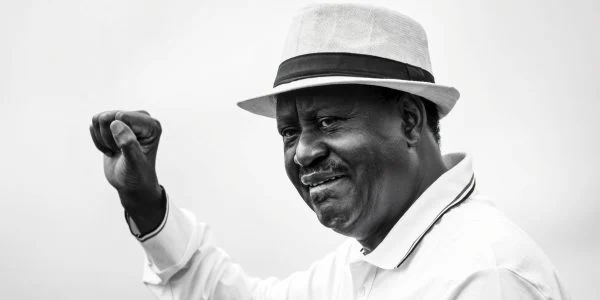
There was a time when a political rally in Kenya was hardly complete without Raila Amolo Odinga taking the microphone. Before he uttered a word, chants of “Baba! Baba!” would sweep through the crowd, supporters would rise to their feet, and the atmosphere would transform.
Then came the familiar smile, the sharp jokes, the political jabs and the carefully delivered lines that could turn an ordinary gathering into a memorable spectacle.
On Thursday, October 15, 2026, Kenya marks one year since Raila’s death, remembering a man whose political presence shaped the country’s conversations for decades. He was celebrated, criticised, opposed and courted, but rarely ignored.
For his supporters, Baba was a symbol of resilience, a political fighter who endured detention, challenged powerful governments and repeatedly returned to the political arena despite failing to capture the presidency.
Also Read: ODM questions Uhuru over claim Raila won 2022 election
To his critics, he was an astute political operator whose shifting alliances sometimes raised questions about his convictions.
Yet beyond the praise and criticism, Raila occupied a rare place in Kenya’s public life: he could mobilise crowds, unsettle political establishments and influence the direction of national debate, even when he was not in government.
One year after his death, the question is no longer simply what Raila meant to Kenya, but what remains of the political movement, democratic ideals and public expectations he left behind.
The fighter who refused to give up
Raila’s political journey began long before the Orange Democratic Movement became synonymous with his name.
Born into the family of Jaramogi Oginga Odinga, Kenya’s first Vice-President, he grew up in a political environment shaped by the country’s struggle over power, democracy and the rights of citizens.
His involvement in the push for multiparty democracy brought detention and years of political hardship. Those experiences helped establish him as one of Kenya’s most recognisable opposition figures and reinforced the image of a man unwilling to abandon a political fight.
Raila contested the presidency five times but never occupied State House. Yet his influence extended well beyond the ballot box.
Also Read: After Raila: 7 battles that will shape Kenya’s opposition vote before 2027
Following the disputed 2007 General Election, he became Prime Minister in the power-sharing government formed with President Mwai Kibaki after months of violence and political turmoil.
He later remained a central figure in debates over constitutional reform, devolution and the structure of Kenya’s political institutions. The 2010 Constitution, in particular, became an important part of the democratic transformation with which his name is frequently associated.
His career was marked by both confrontation and compromise. He led opposition campaigns against successive governments, negotiated political agreements and, at different moments, worked with leaders he had previously opposed.
For his followers, these changes demonstrated political flexibility and a willingness to pursue national stability. For critics, they exposed the contradictions of a politician whose alliances often shifted with the country’s political calculations.
But even when his decisions divided opinion, Raila remained at the centre of the national conversation.
The man behind the microphone
Raila’s political power was not built on policy positions alone. It was also rooted in his ability to communicate with ordinary Kenyans.
He understood the theatre of a political rally: when to pause, when to deliver a punchline and when to turn a serious argument into a moment of laughter.
His speeches blended political grievances with humour, familiar expressions and pointed attacks on his opponents. He could turn a complex national debate into a phrase that supporters repeated long after the rally ended.
Also Read: Oburu Odinga: Kenya can match Singapore if it tackles corruption and cuts government wastage
That ability helped him build a political following that survived electoral defeats, internal disagreements and changing alliances.
To his supporters, every comeback was evidence of resilience. To his opponents, his repeated returns demonstrated an extraordinary ability to remain politically relevant.
His appeal also crossed the boundaries of conventional political campaigning. For many Kenyans, Raila became a symbol of resistance, while for others he represented the frustrations and contradictions of an opposition movement that repeatedly promised change but never secured the presidency.
His influence was therefore not limited to the positions he held. It was also reflected in his ability to determine what politicians debated, what supporters demanded and what the country considered possible.
October 15, 2025: The day Kenya lost Baba
When Raila died on October 15, 2025, Kenya lost one of its most consequential political figures.
His death brought together leaders and supporters from across the political divide, many of whom had spent years opposing him or negotiating with him.
The tributes reflected the complicated nature of his legacy. He was a political rival, a negotiating partner, a reform campaigner and, for millions of supporters, a deeply personal symbol of hope.
But his death also raised a difficult question for the ODM party and the broader opposition: who could command the loyalty, authority and national reach that Raila had accumulated over decades?
The answer has proved far from straightforward.
ODM without Baba: A party divided over its future
One year later, the clearest test of Raila’s legacy is unfolding within the Orange Democratic Movement, the party he built into one of Kenya’s most influential political organisations.
His brother, Oburu Oginga, assumed the party leadership following Raila’s death. But inheriting the leadership position has not automatically meant inheriting the political authority Raila wielded among party members, elected leaders and grassroots supporters.
ODM remains a major political force, but disagreements over its direction and relationship with President William Ruto’s administration have become increasingly public.
Raila’s final political arrangement with Ruto helped pave the way for the broad-based government, bringing together political figures who had previously occupied opposing camps.
After his death, the question became whether ODM should sustain that cooperation or return to a more confrontational opposition role.
The party’s subsequent support for Ruto’s re-election bid ahead of the 2027 General Election has sharpened the debate, with supporters of cooperation arguing that engagement offers ODM an opportunity to influence government policy.
Critics, however, fear that the arrangement could erode the party’s identity as a political vehicle for reform and opposition to the establishment.
The disagreement has drawn in prominent figures, including Nairobi Senator Edwin Sifuna and Siaya Governor James Orengo, while the Linda Mwananchi movement has emerged as a platform for leaders and supporters demanding a different political direction.
The struggle is about more than personalities. It touches on the fundamental question of what ODM should represent without the man who held its competing interests together for years.
The irony is difficult to miss: a party founded and sustained through years of opposition politics is now grappling with divisions over its cooperation with the government.
Whether Raila would have maintained the arrangement, renegotiated it or eventually abandoned it remains a matter of political speculation. What is clear is that his absence has left the party without the one figure whose authority could often contain internal disagreements.
A new generation challenges the old political order
Raila’s death has coincided with a changing political landscape in which traditional leaders and established parties face pressure to respond to demands from younger Kenyans.
The Gen Z-led protests of 2024, driven by opposition to the Finance Bill and broader concerns over taxation, accountability and the cost of living, demonstrated that young people could mobilise nationally without relying entirely on established political parties.
The protests challenged the assumption that mass political mobilisation must be organised around familiar political personalities.
They also exposed a widening gap between public expectations and the performance of political institutions, forcing leaders to confront questions about representation, economic opportunity and accountability.
In this changing environment, Raila’s legacy faces a new test.
For decades, he was associated with street protests, political mobilisation and demands for democratic reform. But the generation now demanding accountability has its own methods, priorities and expectations.
The challenge for ODM and other established political movements is whether they can translate the language of reform into tangible results for citizens who are increasingly impatient with political promises.
Raila’s ability to mobilise crowds remains part of his political legacy. Whether the institutions and movements he helped shape can respond to a new generation is another matter.
An unfinished democratic dream
As Kenya moves towards the 2027 General Election, politicians across rival camps are likely to invoke Raila’s name to defend their positions and appeal to his supporters.
But his legacy cannot be settled through tributes, slogans or claims of political inheritance.
Kenya has made significant democratic gains, including the restoration of multiparty politics and the adoption of the 2010 Constitution. Yet questions about electoral credibility, public accountability, unemployment, the cost of living and the protection of civil liberties remain central to national debate.
Raila never became president, but measuring his life solely through that unfulfilled ambition would overlook the broader impact of his political career.
His contribution must also be considered through the democratic space he helped expand, the political debates he shaped and the expectations he helped raise among millions of Kenyans.
The question now is whether those who invoke his legacy will advance the ideals associated with his struggle or use his name merely as an instrument in the contest for political power.
One year later, the questions remain
One year without Baba, the familiar jokes have become memories, his speeches are preserved in recordings, and the political movement he built is struggling to define its future.
The rallies continue, politicians still trade accusations, and the race for 2027 is gathering momentum. But the man who could command a crowd with a smile, a joke or a single phrase is no longer there.
His absence has exposed the difficulty of separating a political movement from the personality that held it together.
For his supporters, Raila remains a symbol of courage and perseverance. For his critics, his career offers lessons about political compromise, shifting alliances and the limits of personality-driven politics.
For Kenya, his legacy presents a more enduring challenge: how to build democratic institutions that remain strong regardless of who leads them.
Who holds power? Who benefits from it? Who is held accountable when public promises are broken? And who speaks for ordinary Kenyans when those in authority fail them?
These are the questions that shaped much of Raila’s political journey, and they remain unresolved one year after his death.
Raila is gone, but the contest over his legacy is far from over.
Outstanding Amos 💫