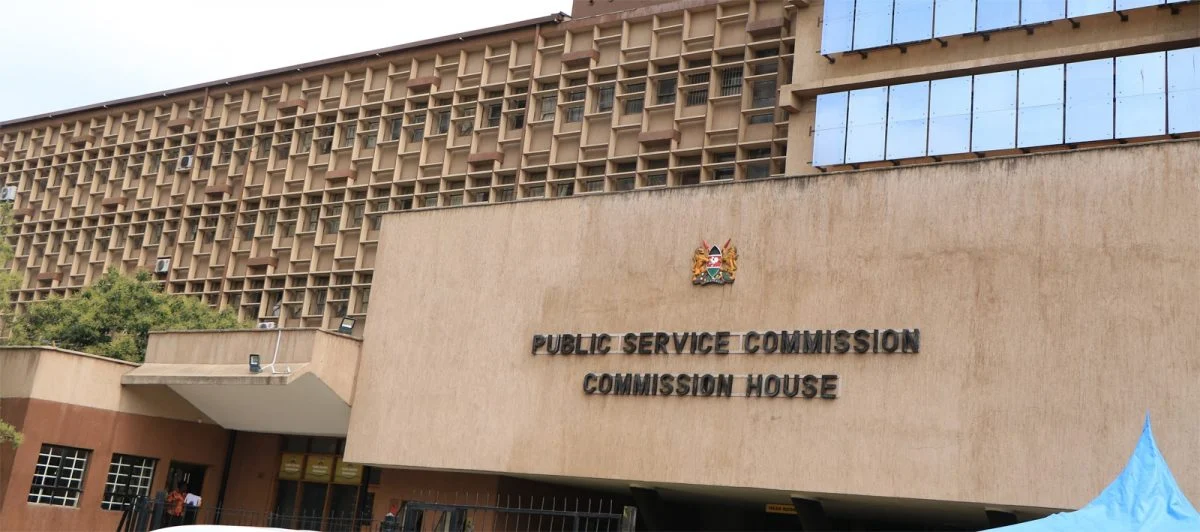
The Kenyan government has strongly protested Israel’s decision to include Kenya among countries whose travellers will face restrictions over Ebola concerns.
In a statement on Monday June 15, 2026, Principal Secretary for Foreign Affairs Korir Sing’oe termed the move unfortunate, noting that Kenya has played a key role in supporting regional Ebola surveillance and response efforts.
“Kenya strongly protests the decision by Israel to include the country amongst those whose travellers it will restrict. This is especially unfortunate given Kenya’s support to regional surveillance and response to Ebola,” Sing’oe said.
Kenya is Ebola free
The PS emphasized that Kenya remains free of Ebola, adding that the country has conducted more than 80,000 tests without recording a single case of the disease.
“With over 80,000 tests, no case of Ebola has been reported in Kenya,” he stated.
The protest comes amid heightened global efforts to contain the spread of Ebola in parts of East Africa, with countries implementing various precautionary measures.
Kenya has maintained enhanced surveillance at its borders and health facilities as part of measures to prevent the importation of the disease while supporting regional response initiatives.
Israel new directives
The diplomatic row follows a directive issued to airlines by Israeli authorities requiring the denial of boarding to passengers travelling to Israel from several countries, including the Democratic Republic of the Congo (DRC), South Sudan, Rwanda, Kenya, and Uganda.
The directive also bars entry to any foreign national who has visited the listed countries within 21 days prior to travel, regardless of nationality.Airlines were instructed to screen passengers before boarding and ensure strict compliance with the new restrictions.
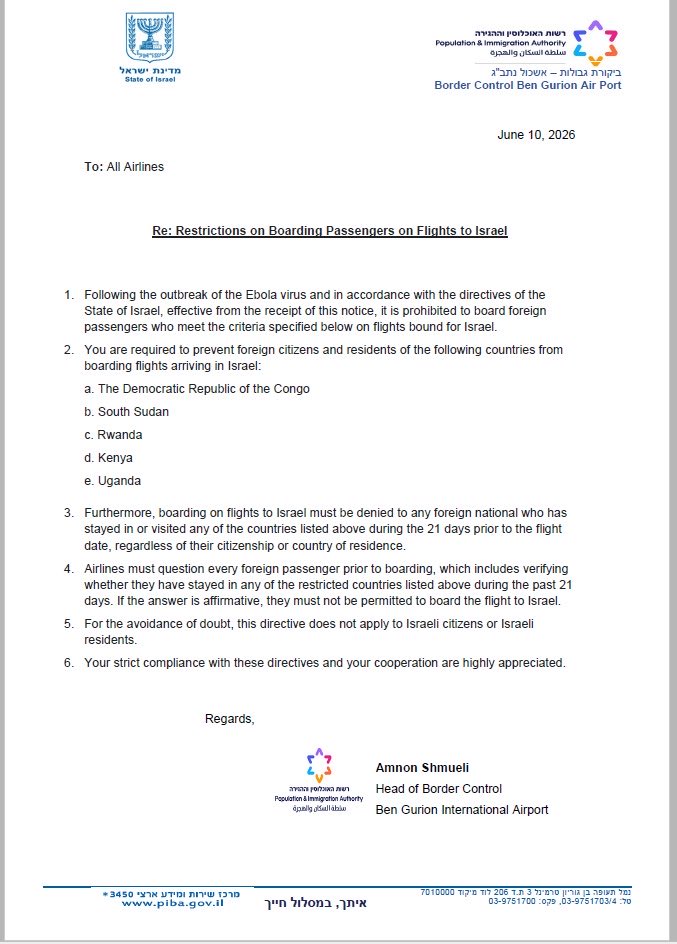
Israeli citizens and residents are exempted from the measures.The notice, issued by Israel’s border control authorities, cited concerns over the spread of Ebola as the basis for the precautionary restrictions.
At present, no Ebola cases have been reported in Israel.
Officials said the public risk remains low, but they warned that the disease’s high fatality rate and complex treatment needs require continuous readiness.
The directive comes amid renewed global concern over Ebola outbreaks in parts of Africa, prompting several countries to tighten travel screening measures.