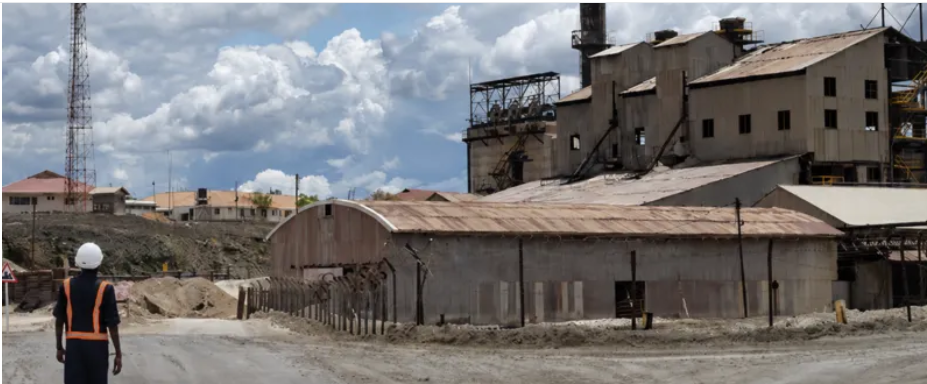
For more than a century, Kenya has extracted one of its most valuable industrial minerals from Lake Magadi and shipped much of it abroad.
Now, the Government wants to change that model.
Principal Secretary for Industrialisation Dr Juma Mukhwana says Magadi Soda could become the foundation of a wider manufacturing ecosystem in Kenya, one that produces glass, chemicals and other industrial goods instead of exporting soda ash and importing finished products made from it.
The proposal fits into President William Ruto’s broader push for value addition, manufacturing and job creation from Kenya’s natural resources.
But what exactly makes soda ash so important, and how could Magadi help transform Kenya’s industrial economy?
What is soda ash and why does Magadi matter?
Soda ash, scientifically known as sodium carbonate, is a key industrial raw material.
It is widely used in glass manufacturing, but also has applications in detergents, chemicals, and several other industrial processes.
Lake Magadi, located in Kenya’s Great Rift Valley, has been a major source of soda ash for more than 100 years.
Also Read: Tata Chemicals Magadi shutdown: DCP accuses Ruto of targeting firm over mineral, oil interests
The mineral is processed locally before being transported by road and rail, largely towards the port of Mombasa for export.
The problem, according to Mukhwana, is what happens after the soda ash leaves Kenya.
Foreign manufacturers use the Kenyan raw material to make finished products such as glass and chemicals, creating factories, jobs, technology and wealth in those countries.
Kenya then imports some of those manufactured products.
In simple terms, the country risks following a “dig, process and export” model while other economies capture much of the higher-value manufacturing.
What does Kenya lose by exporting the raw material?
The Government’s argument is that the value of a mineral is not limited to the money earned from selling it.
The bigger opportunity lies in what can be built around it.
If Kenyan soda ash is used to manufacture glass locally, for example, the economic activity could extend far beyond the original mining operation.
Glass factories would require engineers, technicians, chemists, machine operators, transporters, maintenance companies, laboratories, packaging firms, and other suppliers.
Also Read: Methu mocks President Ruto’s ‘campaign not started’ remarks
Those businesses would create additional employment and tax revenues while developing industrial skills.
Mukhwana describes this as moving from a mining operation to an industrial ecosystem.
Instead of Magadi being known primarily as a place where soda ash is extracted, the area could become a manufacturing centre.
Why is glass manufacturing a major opportunity?
Glass is used across almost every modern economy.
It is needed for buildings and windows, bottles, food and beverage packaging, pharmaceuticals, laboratories and numerous other applications.
Kenya already produces the raw material required for part of that manufacturing chain.
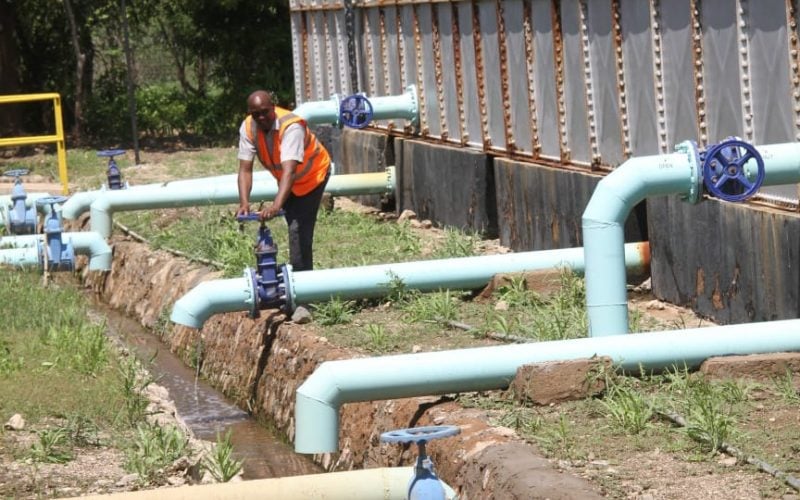
The Government’s argument is therefore straightforward: if Kenya has a critical input, why not attract factories that use it?
A major glass manufacturing plant could become an anchor investment around which other industries develop.
For example, packaging companies could supply bottles and containers, engineering firms could provide machinery and maintenance services, while logistics companies could transport finished products to markets.
Also Read: Bomet Airstrip set for major revival after three decades of delay
That creates what economists call an industrial cluster.
Could Magadi create thousands of jobs?
Potentially, but the impact would depend on the scale of investment that eventually comes to the area.
A soda ash mine employs people directly, but a manufacturing ecosystem can create employment at several levels.
These could include:
- Engineers and technicians
- Chemists and laboratory specialists
- Factory workers
- Transport and logistics operators
- Equipment suppliers
- Construction workers
- Maintenance companies
- Packaging businesses
- Small and medium-sized enterprises
- Professional and financial services
The indirect effect could be just as important as jobs inside the factories.
Also Read: Foot-and-Mouth Outbreak Leaves Bomet Farmers Counting Losses
A factory creates demand for suppliers, suppliers create demand for other businesses, and a larger industrial base can attract additional investors.
Why has India become part of the Magadi debate?
Mukhwana’s argument goes beyond soda ash and focuses on Kenya’s wider trade relationship with India.
According to figures cited in his statement, Kenya-India merchandise trade reached about $4.31 billion in the 2025/26 financial year.
India exported approximately $4.01 billion worth of goods to Kenya, while Kenyan exports to India were about $290 million.
That means Kenya imported roughly 14 times the value of goods it exported to India.
The structure of that trade is also significant.
India sells Kenya manufactured products including pharmaceuticals, machinery, vehicles, electrical equipment, plastics and chemicals.

Kenya, meanwhile, exports products such as tea, coffee, soda ash, vegetables and scrap metals, alongside other primary or minimally processed goods.
Mukhwana argues that this pattern should change.
What does Kenya want Indian companies to do?
The proposal is not to stop Indian companies from accessing the Kenyan market.
Instead, Kenya wants more of the manufacturing to take place inside Kenya.
For example, Indian pharmaceutical companies could establish production plants in Kenya rather than simply exporting finished medicines to the country.
The same approach could potentially be applied to sectors such as:
- Pharmaceuticals
- Chemicals
- Automotive components
- Electronics
- Textiles
- Machinery
- Glass manufacturing
The argument is that Indian companies would still access the Kenyan market while gaining a base from which to serve the wider African market.
Why is Africa’s 1.4 billion-person market important?
Kenya’s biggest selling point is not necessarily its domestic market alone.
Through the African Continental Free Trade Area, investors can potentially use Kenya as a production and export base for a much larger African market of more than 1.4 billion people.
That changes the investment proposition.
Also Read: Ruto inspects Ksh2.2bn Loitoktok housing project, announces 580-bed KMTC hostel
Instead of an Indian company building a factory solely to serve Kenyan consumers, it could manufacture in Kenya and export to markets across East, Central, West and Southern Africa.
This is the industrial model the Government wants to promote.
But will local manufacturing automatically happen?
No.
Having soda ash in Kenya does not by itself guarantee that large-scale manufacturing will follow.
Kenya would need to attract substantial capital and provide the conditions required for competitive manufacturing.
These include reliable electricity, efficient transport infrastructure, skilled labour, access to finance, predictable policies, competitive production costs and access to domestic and international markets.
Investors would also need confidence that locally manufactured products can compete with imports.
The Government’s challenge will therefore be to turn the political commitment around Magadi into commercially viable projects.
What about Kenya’s trade with India?
Mukhwana is also calling for a modernised economic relationship between the two countries.
Kenya and India have maintained trade relations under a framework dating back to 1981.
But Kenya’s industrial needs have changed dramatically since then.
Mukhwana argues for a Kenya-India Comprehensive Economic Partnership Agreement that would increase Kenyan exports to India while encouraging investment and technology transfer into Kenya.
Such an arrangement, he argues, should address tariff and non-tariff barriers affecting Kenyan exports, improve recognition of standards and promote industrial cooperation.
Kenya would also like greater access for products such as tea, coffee, avocados, macadamia nuts, leather, textiles and other value-added goods in the Indian market.
The bigger question: Can Kenya stop exporting jobs?
That is at the heart of the Magadi debate.
For decades, African economies have exported commodities while importing finished products.
Kenya has exported tea and coffee while importing processed goods. It has exported hides and skins while importing finished leather products. It has exported minerals while importing machinery and manufactured products.
Mukhwana argues that Kenya must change what it exports.
Instead of exporting mainly soda ash, Kenya should aim to export glass and other products manufactured using soda ash.
Instead of exporting raw agricultural products, it should export processed food.
Instead of exporting raw materials, it should increasingly export finished or semi-finished products.
That is the difference between resource extraction and industrialisation.
What would success at Magadi look like?
The Government’s vision is for Magadi to evolve from a mineral extraction centre into a manufacturing hub.
That could mean glass factories, chemical plants, laboratories, engineering firms, logistics companies and SMEs operating around the soda ash industry.
Finished products could then be sold locally and exported across Africa and beyond.
But achieving that vision will require more than a policy announcement.
Kenya will have to attract investors, secure technology, build infrastructure, develop skills and ensure that local manufacturing remains competitive.
If those pieces fall into place, Magadi could become an example of how natural resources can support industrialisation rather than simply generate export earnings.