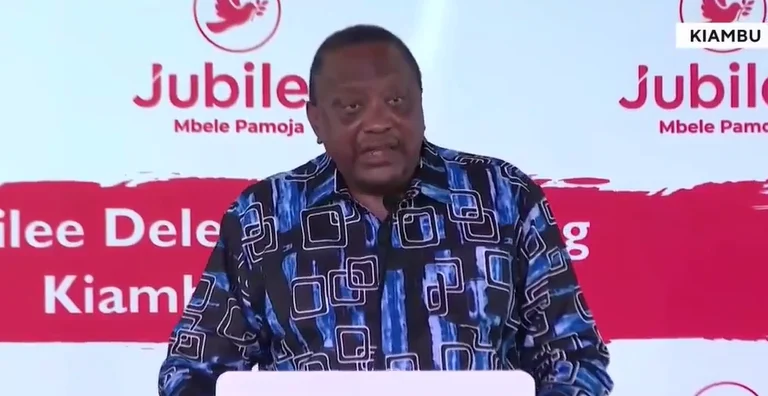
For months, the political friction between Nakuru Governor Susan Kihika and Kuresoi North Member of Parliament Alfred Mutai simmered under a facade of party unity. Last Friday, that facade shattered completely at the Sirikwa Umoja Grounds.
What was advertised as a routine youth and women empowerment meeting transformed in minutes into a battlefield of flying stones, torched vehicles, and ringing gunshots.
When the dust settled, three people were hospitalized at Molo Level 4 Hospital with gunshot wounds, a local welfare bus lay in charred ruins, and the National Police Service (NPS) had launched an unprecedented manhunt for a sitting lawmaker.
The Kuresoi North crisis is not merely a localized security breach. It is an explosive manifestation of a deepening supremacy battle for the political soul of Nakuru County—one that lays bare the ruthless nature of regional turf wars ahead of the next electoral cycle.
Invading the Sovereignty of Turf
In the calculus of Rift Valley politics, a constituency is an MP’s sovereign territory. To enter it without a formal invite, or worse, to host an event there alongside external heavyweights, is a recognized declaration of political warfare.

When Governor Kihika arrived in Kuresoi North flanked by national political operators like Kapseret MP Oscar Sudi and Bahati MP Irene Njoki, the optics were unmistakable. Kihika was not just launching an empowerment project; she was projecting pan-county authority right into Mutai’s backyard.
Local political analyst Kiprotich Bett notes:
“In Kenyan political theater, a governor bringing heavy-hitting national allies into a constituency without the local MP’s alignment is often read as an existential threat. It signals that the governor is either looking to house-train the sitting lawmaker or preparing the ground to sponsor a preferred challenger in the next election.”
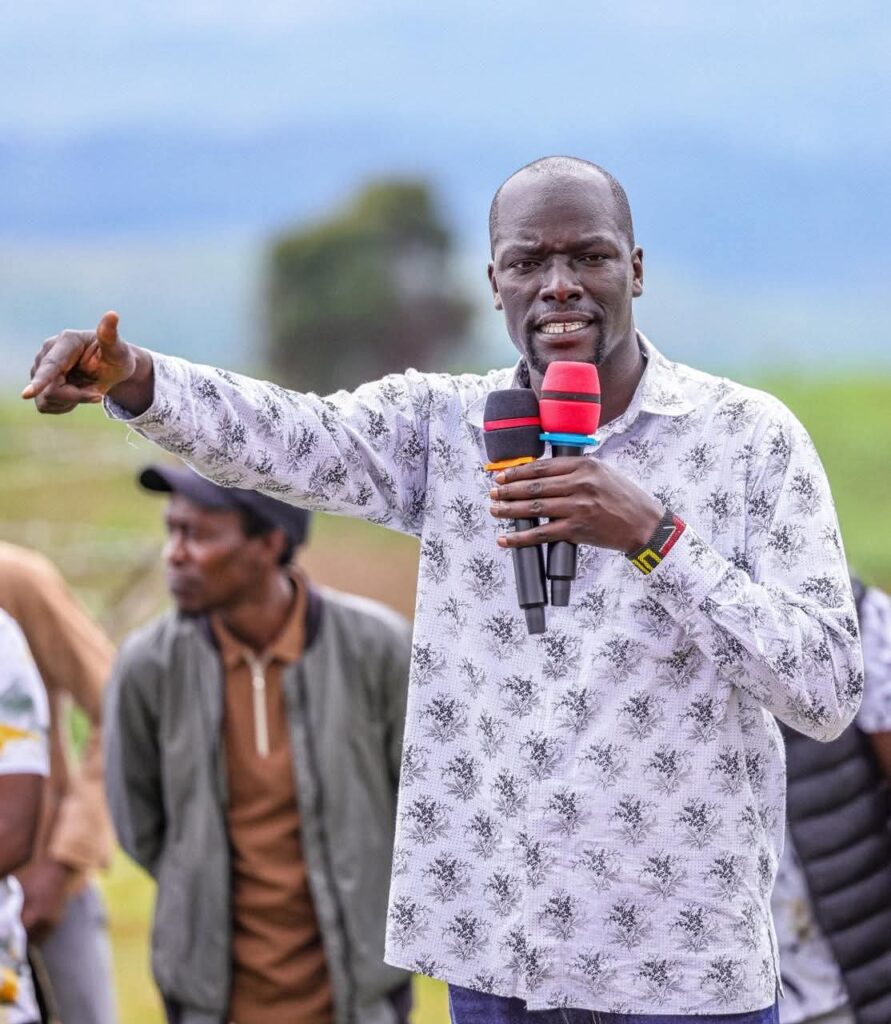
When Mutai arrived at the venue with hundreds of his own supporters, the atmosphere,already thick with tension,ignited. Rival groups clashed in violent running battles, culminating in the destruction of the MP’s own vehicle, the burning of a logistics bus, and the drawing of firearms.
Power Dynamics and the Sudi Factor
The inclusion of Oscar Sudi in Kihika’s entourage elevates the stakes of this localized clash to a national conversation. Sudi is widely regarded as a key power broker and a close ally of the presidency within the United Democratic Alliance (UDA) apparatus.
By standing shoulder-to-shoulder with Kihika in Kuresoi, Sudi effectively signaled that the Governor enjoys the backing of the ruling party’s core machinery. For Mutai, who finds himself outside this immediate circle of influence, the confrontation represents a broader struggle against systemic isolation within his own party.
The resulting violence highlights a troubling national trend: internal party rivalries between county executives (Governors) and constituency lawmakers (MPs) are increasingly bypassing institutional arbitration, playing out instead through violent proxies on the grassroots stage.

Weaponizing the Youth
The irony of the violence erupting at a “Youth Empowerment” event is lost on no one. In regions grappling with economic hardship, young people are frequently treated as raw political capital.
Rather than receiving sustainable economic opportunities, local youth are too often co-opted into political defense units or mobilized as rapid-response crowds to disrupt rival gatherings.
The deployment of firearms and the structural nature of the disruption in Kuresoi North point to a highly organized, heavily capitalized strategy where both sides are willing to risk lives to control the political narrative.
With NPS Spokesperson Muchiri Nyaga publicly branding Hon. Alfred Mutai the prime suspect and stating that he is on the run, the tactical advantage has shifted, at least temporarily, to the Governor.
The gunfire in Kuresoi North serves as a stark warning that the political truce within Nakuru’s political elite has definitively fractured.
As regional kingpins begin the delicate process of realigning themselves for the next general election, the boundaries between executive county power and constituency territorialism are blurring.
If Friday’s events are any indication, the battle for Nakuru will not be fought in boardroom negotiations, but on the very dirt roads and school grounds of the constituencies with the local electorate caught squarely in the crossfire.