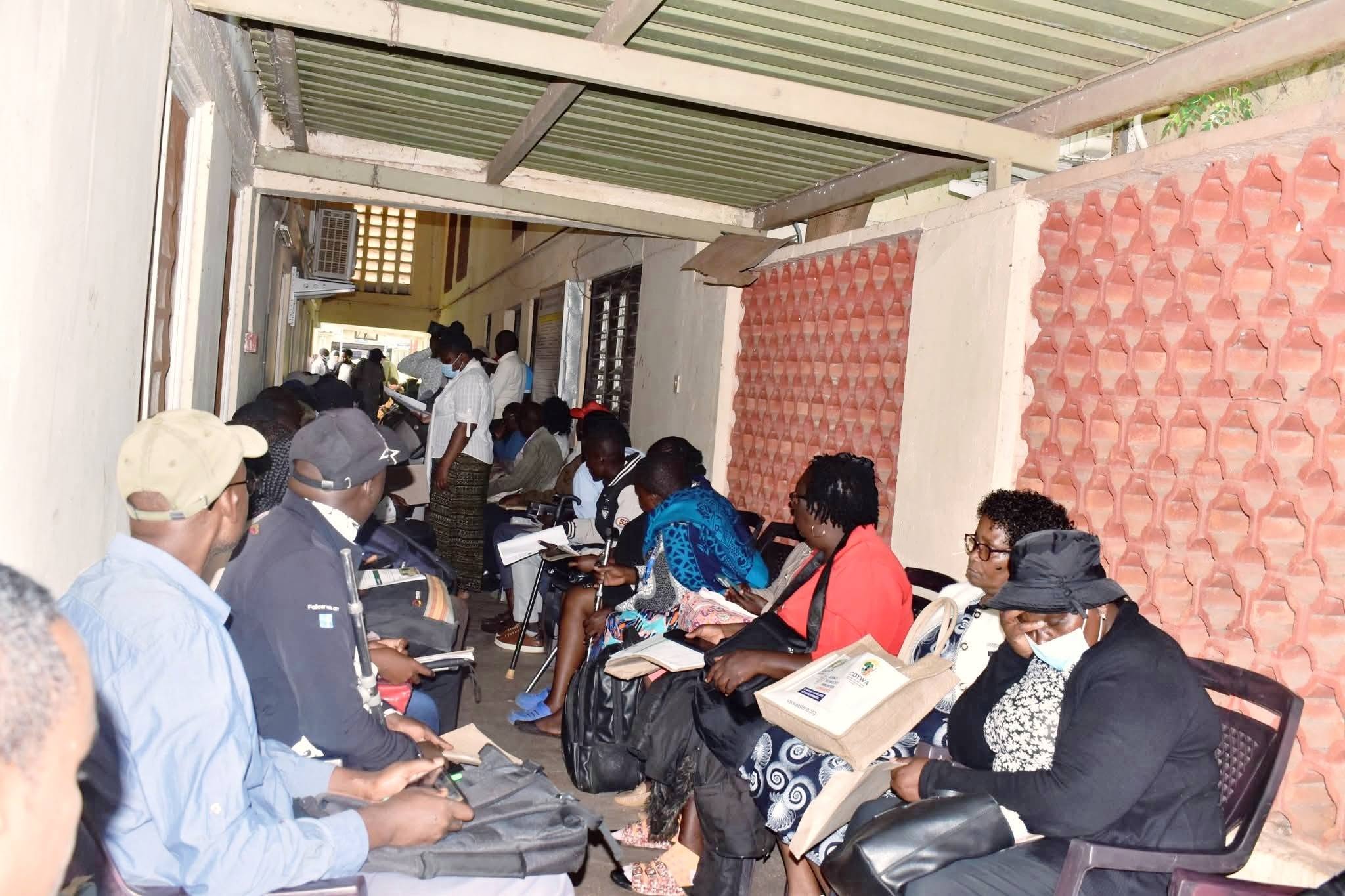
National Council for Persons with Disabilities (NCPWD) has moved closer to implementing key regulations under the Persons with Disabilities Act, 2025, with rules on registration and adjustment orders making progress while proposed income tax regulations remain under consultation with the National Treasury and the Kenya Revenue Authority (KRA).
In a press statement issued by the Council, NCPWD said it has developed three regulations to operationalise the new law, covering registration of persons with disabilities, adjustment orders, and income tax exemptions for persons with disabilities, their parents and guardians.
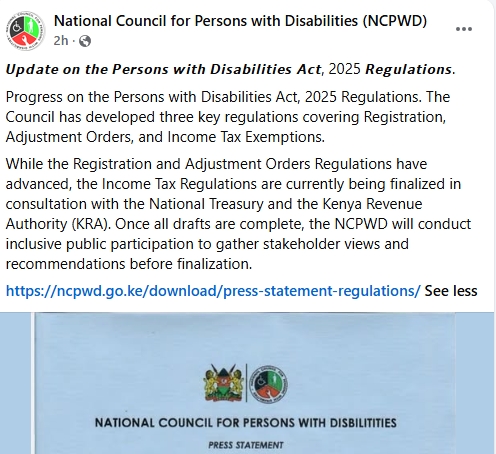
A screen grab of the National Council for Persons with Disabilities (NCPWD) press statement, screen grab by Bomet Newswire
The Council said the process is at different stages, with two sets of regulations having progressed significantly.
“The Registration and Adjustment Regulations have progressed well, while the Income Tax Regulations are still undergoing finalization through consultations with the National Treasury and the Kenya Revenue Authority (KRA),” A part of statement released by NCPWD read.
Public participation to shape final regulations
The update is significant for persons with disabilities who have been waiting for the new legal framework to translate into practical protections, services and benefits.
According to the press release, NCPWD will undertake public participation once the draft regulations have been completed, allowing persons with disabilities and other stakeholders to examine the proposed rules and make recommendations.
“Once the regulations have been finalised, NCPWD will proceed with public participation, providing persons with disabilities and other stakeholders with an opportunity to review the proposed regulations and give their views and recommendations before the regulations are finalized,” A part of press statement released by NCPWD read.
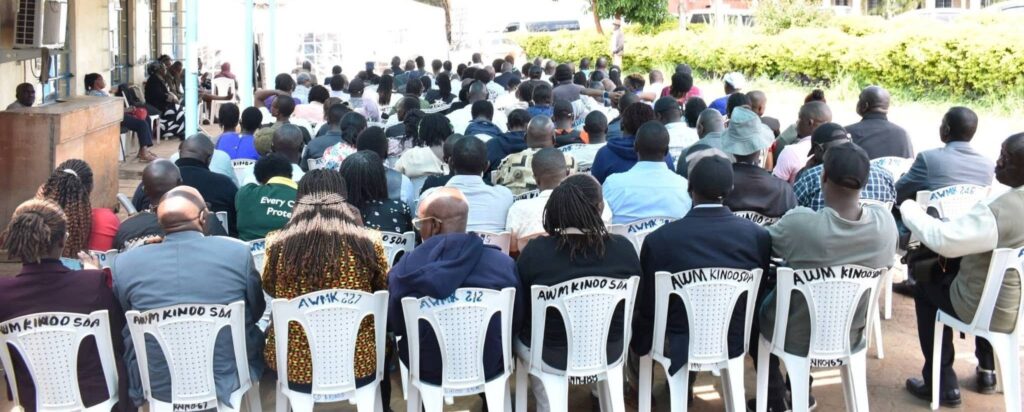
The planned consultations are expected to provide an avenue for people directly affected by the regulations to raise concerns and propose changes before the rules are formally concluded.
The Council said it will also communicate the next steps and arrangements for public participation to the disability community and other stakeholders.
“We will keep the PWD community and other stakeholders informed on the next steps and arrangements for public participation,” A part of statement released by NCPWD read.
Tax exemption regulations still being finalised
Among the three proposed regulatory frameworks, the income tax regulations are attracting particular attention because they are intended to provide the framework for tax exemptions involving persons with disabilities, as well as eligible parents and guardians.
The regulations are being finalised in consultation with the National Treasury and KRA.
The new law expanded the legal framework for tax reliefs available to persons with disabilities. KRA currently states that the existing income tax exemption for qualifying persons with disabilities applies to the first KSh150,000 per month, or KSh1.8 million annually.
What the new regulations could mean
The Registration Regulations are expected to provide the framework for registering persons with disabilities under the new Act, while the Adjustment Orders Regulations relate to mechanisms for addressing barriers and ensuring greater accessibility and accommodation.
The 2025 Act replaced the previous Persons with Disabilities Act of 2003 and introduced a wider legal framework for protecting the rights and inclusion of persons with disabilities.
The tax provisions of the new law also provide for income tax exemptions and other tax-related incentives, including provisions concerning employment and reasonable accommodation.
NCPWD pledges an inclusive process
The Council said the regulatory process will be guided by the interests and rights of persons with disabilities.
“NCPWD remains committed to ensuring that the process is inclusive, transparent and guided by the rights and interests of persons with disabilities,” the statement reads.
The latest announcement effectively places public participation as the next major stage once the outstanding drafting and consultations are completed.
For the disability community, the consultations will offer an opportunity to scrutinise the proposed regulations and determine whether they adequately address practical challenges around registration, accessibility, reasonable accommodation and access to tax reliefs.